Article
ATRC Aging, Dementia Friendly Alabama and ADPH Partners to Raise Dementia Awareness in Selma
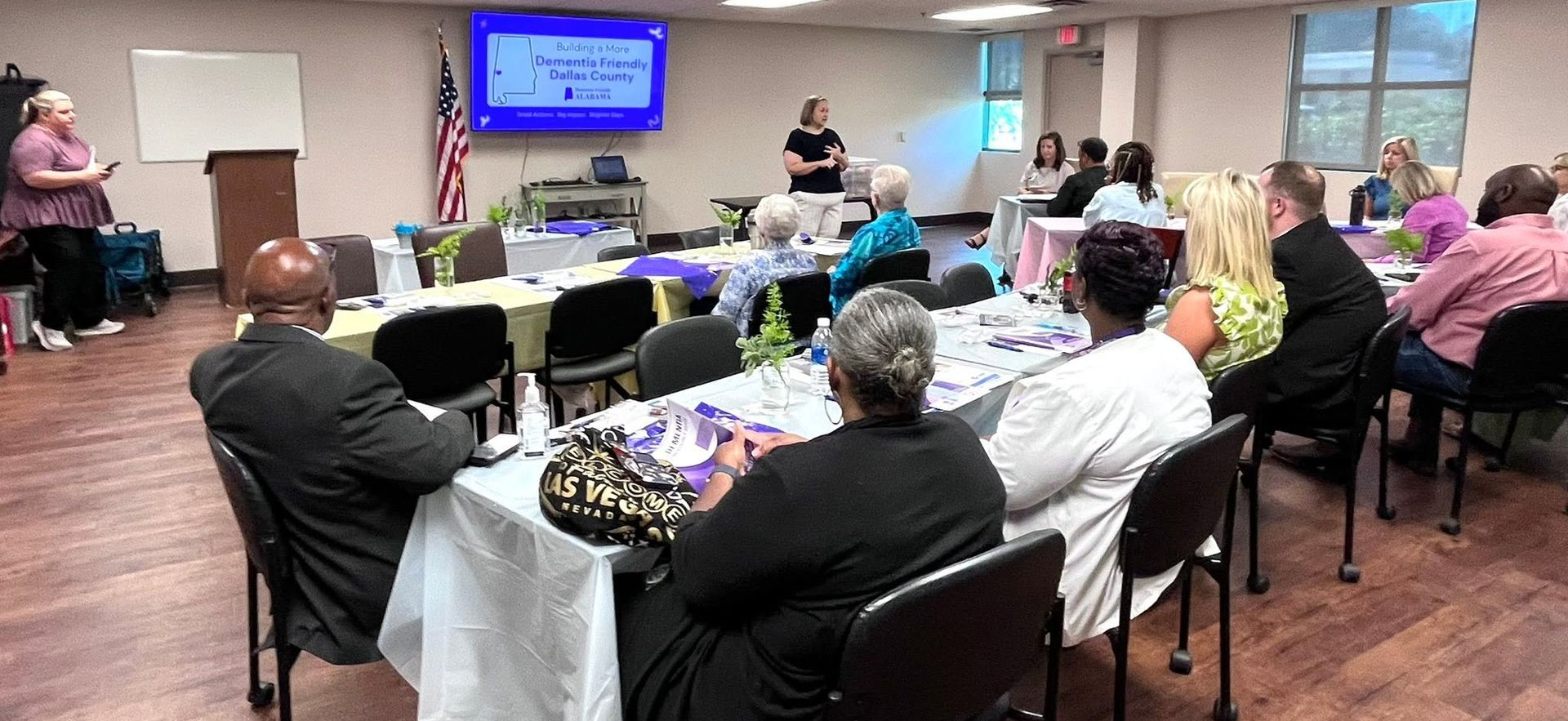
On Thursday, June 4, the Alabama Tombigbee Regional Commission Area Agency on Aging (AAA) partnered with Dementia Friendly Alabama and The Alabama Department of Public Health to host an awareness lunch and learn in Selma. | The Selma and Dallas County Chamber of Commerce and Tourism Information
By Faith Callens
Special to the Selma and Dallas County Chamber of Commerce and Tourism Information
On Thursday, June 4, the Alabama Tombigbee Regional Commission Area Agency on Aging (AAA) partnered with Dementia Friendly Alabama and The Alabama Department of Public Health to host an awareness lunch and learn in Selma for community partners to learn more about dementia and its effects on the aging population in Dallas County.
Jennifer Dailey, who is the Alabama CARES Coordinator of the ATRC organization, welcomed Selma’s community partners to the Vaughan Regional Medical Center’s Medical Tower Classroom to explain more about ATRC Aging, its latest initiative including the latest research study the State of Alabama has done on dementia.
“The State of Alabama did a big survey and came to find the top five counties that are struggling the most with dementia,” Dailey said. “That are missing resources, missing knowledge and just missing access because they are a long way from places and [through our organization], we want to bring more awareness [to counties that we serve] so we can reduce those gaps.”
unties mentioned in the survey was Dallas County and that the Lunch and Learn event held by their organization on June 4 was the first for the Selma area.
Like Dailey, Dallas County Probate Judge and ATRC board member Jimmy Nunn spoke to the community partners as well, advocating for more dementia support programs in the county. To push his advocacy efforts forward, he shared his own personal experience dealing with Dementia through the care of a family member.
“My mother had dementia,” Nunn said. “Prior to her death, it’s very challenging, very burdensome on the caretaker.”
Nunn said families who are dealing with loved ones with the condition should take the time out to love on them, which is a rule of thumb he said he used daily for caring for his mother.
“A lot of times, the doctor will diagnose [your loved one] just like they did my mother, and we [the caregivers] are the ones that just say we have to deal with it and that we have to have somebody there on a daily basis to watch them,” Nunn said.
Sometimes [my mother] would forget, leave and not be able to get back to her location and so we as a family had to pull together and come together on that.”
Like Nunn, Dementia Friendly Alabama Community Convener Delane Poague told the crowd that her grandmother too lived with Dementia for 12 years and that it is a condition that lies near and dear to her heart.
Then, Alabama Public Health Chronic Disease Director Laura Auffant also spoke to the crowd informing them of the BOLD grant and how it can benefit families seeking guidance about the early stages of Dementia including why early detection of the condition matters.
“Before I start, I will also say I am walking the walk with dementia with several family members and it’s a difficult time,” Auffant said. Often times, we don’t have answers.”
As Auffant continued, she said in 2018, The Building Our Largest Dementia (BOLD) Infrastructure for Alzheimer's Act provided federal funding to strengthen the public health approach to Alzheimer's and its related dementias.
"[When] I talk about the public approach that doesn’t just mean us at the Alabama Department of Public Health, it means the way that we are approaching our work,” Auffant said. “Typically, doctors can provide one on one service and the way we go about public health activities is that we can go in and impact the health of many people in a community.”
Auffant said there’s also stronger evidence that shows now of high blood pressure being linked to the increased risk of cognitive decline and dementia and she said if the aging population learns how to lower it now, it may help to protect their brain health in the future.
Auffant said residents who actively live with hypertension can take advantage of their free Healthy Heart Ambassador Blood Pressure Self-Monitoring Program that’s located on their website to learn more about managing and maintaining a healthy heart and lifestyle.
As the event went on, Poague demonstrated to the public just how dementia can affect those living with the condition by a hands-on activity that impairs the mind, the eyes, active movement in the hands and the reduction in hearing in the ears.
Poague said through this activity, caregivers can learn in real time the challenges that loved ones could face as the condition worsens and that the activity is used as a way to build a deeper level of care between caregivers and their loved ones living with dementia.
For more information about dementia or caregiver support, visit Dementia Friendly Alabama or Alabama Public Health’s website and for more information about ATRC Aging, visit atrcaging.com.